

Differentiating Cardiac Masses with Echo
Cancer, Cardiac Risk, and the Role of Echocardiography

Cancer, Cardiac Risk, and the Role of Echocardiography
Cancer remains a major global health challenge, with nearly 20 million new cases diagnosed each year and more than 50 million people living within five years of a diagnosis. As cancer survival improves, clinical focus has expanded to include the short term effects of treatment and long-term cardiovascular health of survivors.
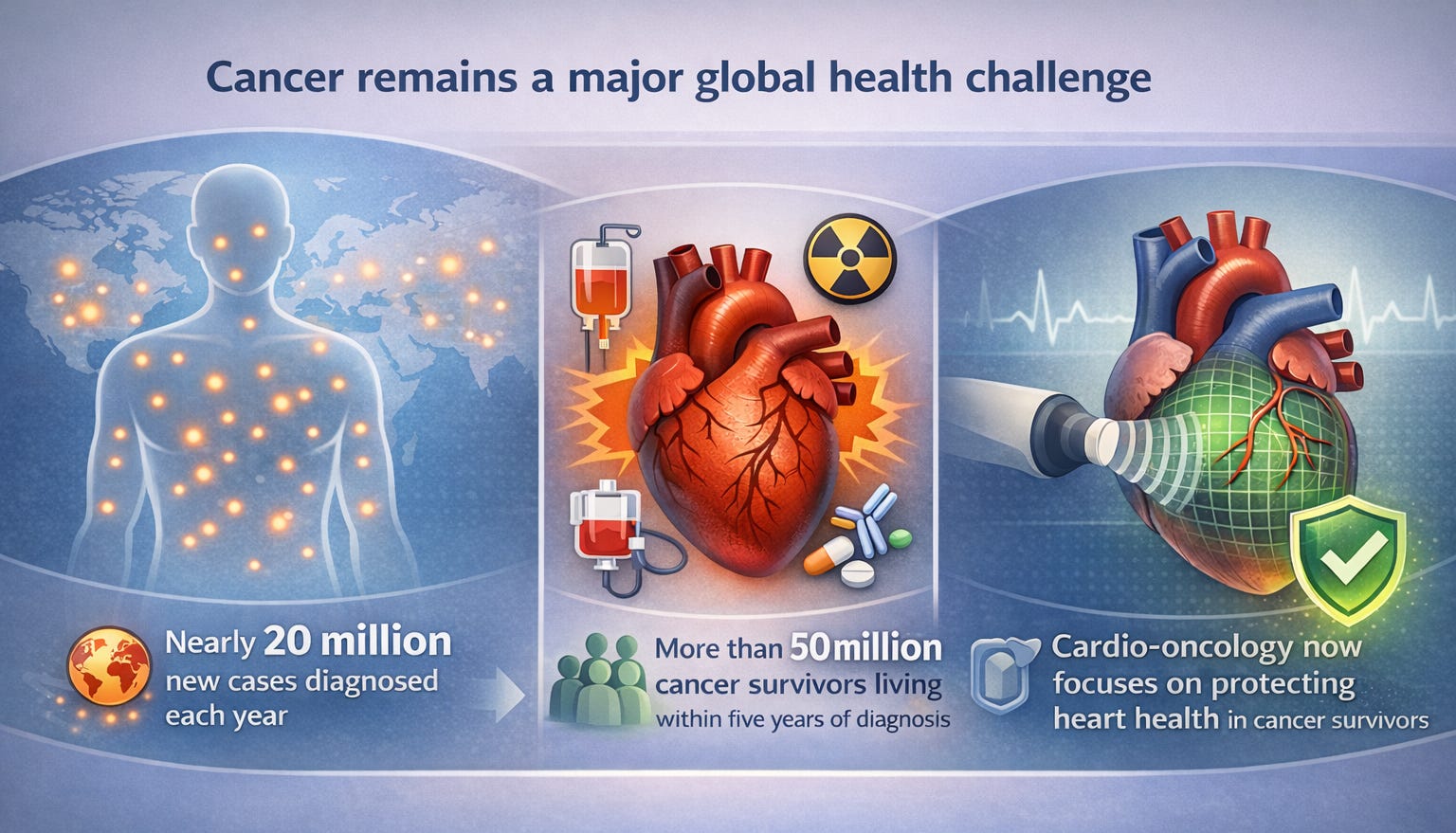
Many cancer therapies, while life-saving, can increase the risk of cardiomyopathy, heart failure, pericardial disease, and arrhythmias. This growing cardiovascular burden has driven the field of cardio-oncology, which emphasizes early detection and prevention of cancer therapy–related cardiac complications.
Echocardiography is central to this care model. It provides a safe, non-invasive, and repeatable method to monitor cardiac structure and function throughout cancer treatment. Beyond assessing ventricular performance, echocardiography also plays a critical role in the detection and characterization of cardiac masses. Understanding the distinction between secondary cardiac tumors and primary cardiac tumors is essential, as their prevalence, clinical implications, and management differ significantly.
